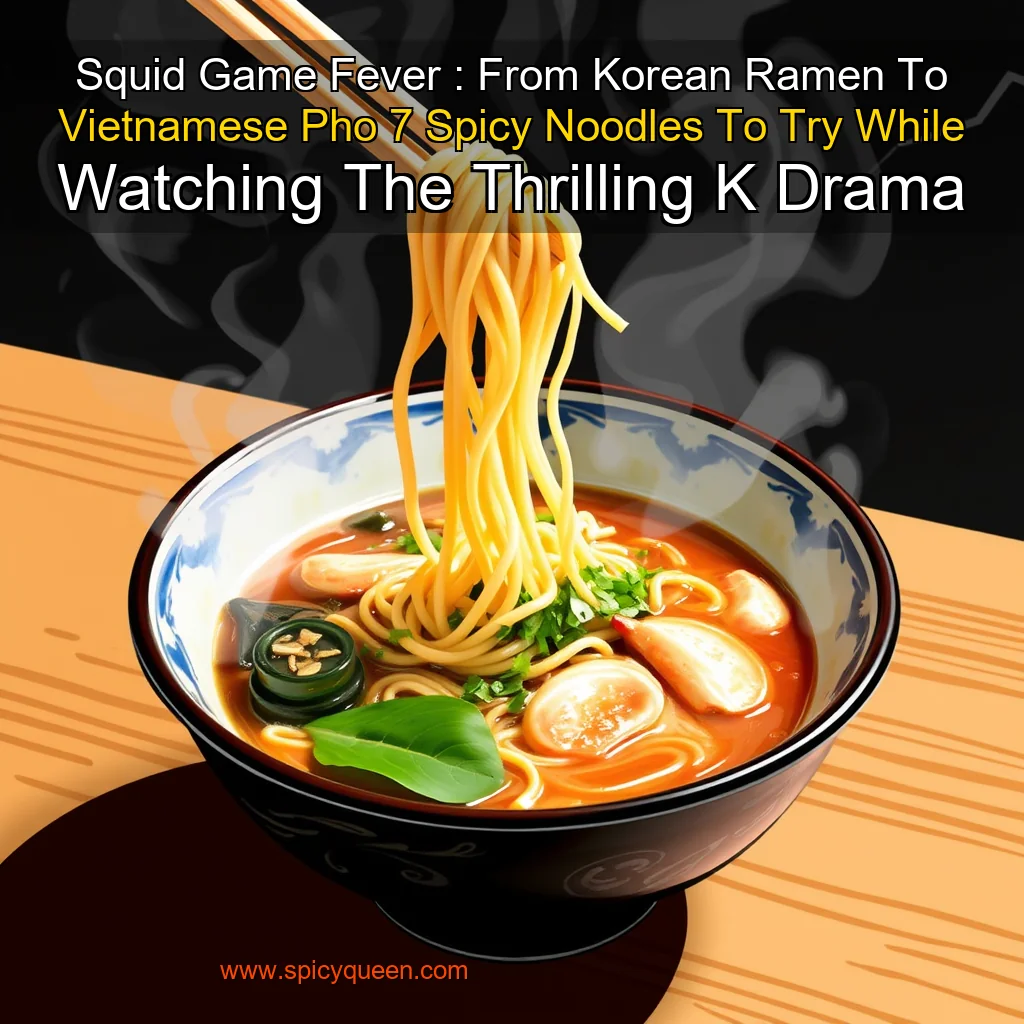
Spicy noodle recipes inspired by Squid Game’s bold energy.
Spicy Noodle Recipes Inspired by Squid Game
Squid Game has taken the world by storm, captivating audiences with its unique blend of social commentary, suspense, and dark humor. As fans eagerly await the release of Season 2, we’re excited to share seven spicy noodle recipes inspired by the show’s bold energy.
Korean-Style Spicy Noodle Soup
Spicy Ramen Noodle Soup
Spicy Udon Noodle Stir-Fry
The Origins of Pad Kee Mao
Pad Kee Mao, also known as Thai Drunken Noodle, is a popular Thai dish that originated in the 1970s in Bangkok. The dish is believed to have been created by a chef named Saipin Chutima, who owned a restaurant in the city’s Chinatown. Chutima’s original recipe used a combination of ingredients such as chicken, Thai basil, and chilies, which were cooked in a wok and served with steamed rice.
The Evolution of Pad Kee Mao
Over time, the dish gained popularity and spread throughout Thailand. Different regions and chefs began to put their own spin on the recipe, adding new ingredients and cooking techniques.
The Origins of Dan Dan Noodles
Dan Dan noodles originated in China, specifically in the Sichuan province, where the spicy and numbing flavors are deeply rooted in the local cuisine. The dish has a long history, dating back to the Qing dynasty, when it was served as a simple, comforting meal for the working class.
The Evolution of Dan Dan Noodles
Over time, Dan Dan noodles evolved and spread throughout China, with various regions adapting the recipe to their own tastes and ingredients. In the 1980s, a Japanese chef, who was inspired by the Sichuan dish, created a Japanese twist on Dan Dan noodles. This new version incorporated a creamy sesame broth and spicy minced pork, which quickly gained popularity in Japan.
Key Ingredients and Techniques
The Japanese Twist
The Japanese version of Dan Dan noodles is a unique and delicious adaptation of the original Sichuan dish. The creamy sesame broth and spicy minced pork are a perfect combination, and the addition of chilli oil adds an extra layer of flavor. This dish is a must-try for anyone who loves spicy food and is looking for a new culinary adventure.
Variations and Regional Differences
The Origins of Indonesian Mie Goreng
Indonesian Mie Goreng, also known as Fried Noodles, is a beloved dish that originated in Indonesia. The name “Mie Goreng” is derived from the Indonesian words “mie” meaning noodles and “goreng” meaning fried. This simple yet flavorful dish has been a staple in Indonesian cuisine for decades, and its popularity has spread globally.
The History of Indonesian Mie Goreng
The origins of Indonesian Mie Goreng date back to the Dutch colonial era, when Indonesian cooks began experimenting with Western-style noodles and stir-fry techniques. The dish was initially inspired by Chinese and Malay cuisine, with the addition of local ingredients and spices. Over time, Indonesian Mie Goreng evolved into a unique fusion of flavors and textures that is now enjoyed by people around the world.
The Key Ingredients of Indonesian Mie Goreng
The Preparation of Indonesian Mie Goreng
Cooking the Noodles
To prepare Indonesian Mie Goreng, start by cooking the noodles according to the package instructions.