
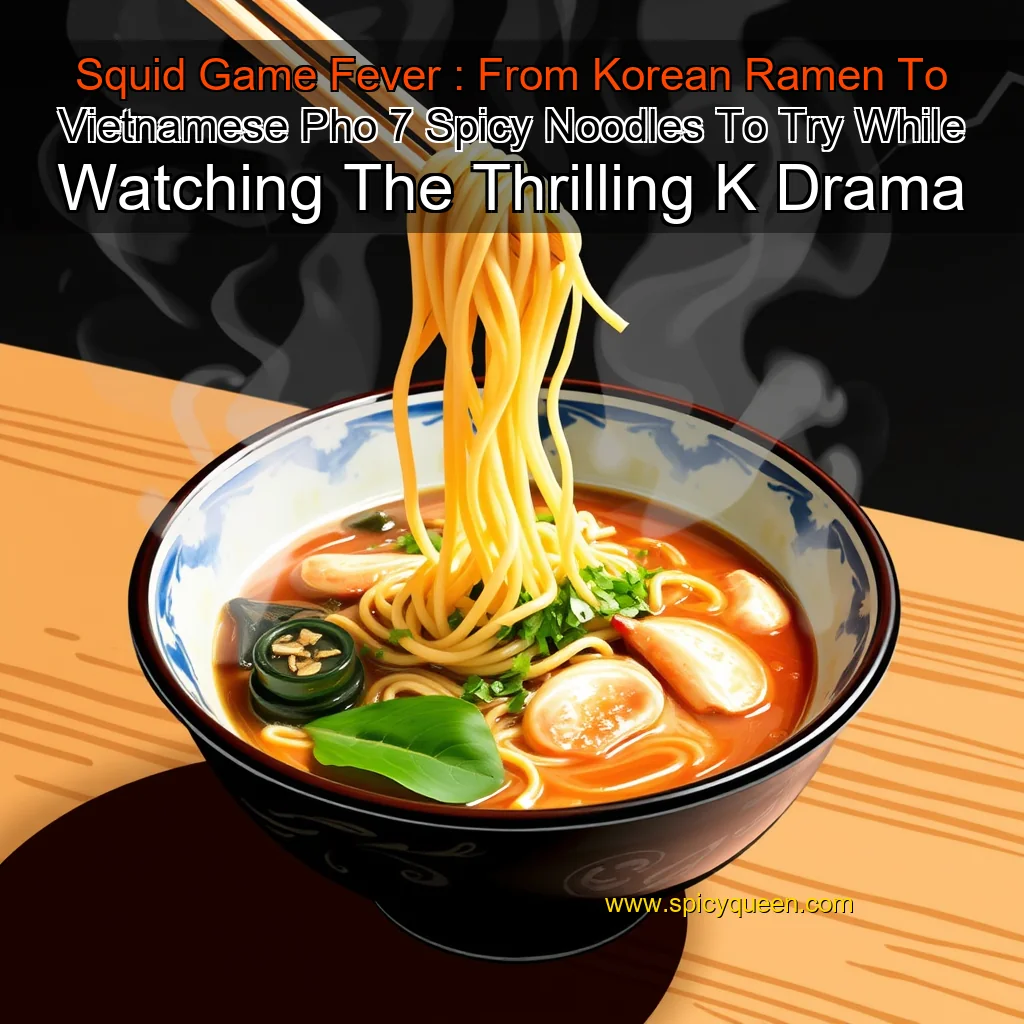
Spicy noodle recipes inspired by Squid Game’s unique blend of Korean and Japanese flavors.
Spicy Noodle Recipes Inspired by Squid Game
Squid Game has taken the world by storm, captivating audiences with its unique blend of social commentary, suspense, and dark humor. As fans eagerly await the release of Season 2, we’re excited to share seven spicy noodle recipes inspired by the show. From Korean chili flakes to Japanese miso paste, these dishes will transport you to the world of Squid Game.
Korean-Style Spicy Noodle Soup
Combine Gochujang, soy sauce, rice vinegar, sugar, ginger, and red pepper flakes in a saucepan. Whisk until smooth. Add chicken broth and bring to a boil. Reduce heat and simmer for 10 minutes. Add noodles, green onions, mushrooms, and chicken or tofu.
The dish is known for its intense heat and bold flavors, making it a favorite among those who enjoy spicy food.
The Origins of Spicy Thai Drunken Noodles
Spicy Thai Drunken Noodles, also known as Pad Kee Mao, has its roots in the 1930s in Thailand. The dish was created by a chef named Pong, who worked at a restaurant in Bangkok. Pong’s original recipe was inspired by the traditional Thai dish, Pad Thai, but with a twist.
Introduction
Japanese cuisine has long been known for its unique and innovative approaches to traditional dishes. One such example is the Japanese twist on Chinese Dan Dan noodles, which has gained popularity worldwide for its bold flavors and textures. In this article, we will delve into the world of Japanese Dan Dan noodles and explore its preparation, ingredients, and cultural significance.
Ingredients
Preparation
To prepare Japanese Dan Dan noodles, start by cooking the noodles according to the package instructions. While the noodles are cooking, prepare the sesame broth by combining sesame oil, sesame paste, soy sauce, rice vinegar, sugar, and chili oil in a saucepan. Bring the mixture to a simmer over medium heat and let it cook for about 5-7 minutes, stirring occasionally, until the sauce has thickened slightly. Once the noodles are cooked, drain them and add them to the sesame broth. Toss the noodles in the broth until they are well coated, then add minced pork, scallions, and sesame seeds.
The Flavours of Indonesian Mie Goreng
Indonesian Mie Goreng, or’stir-fried noodles,’ is a culinary masterpiece that harmoniously balances sweet, spicy, and savory flavours. This beloved dish has captured the hearts of many with its unique blend of ingredients and techniques.
The Building Blocks of Mie Goreng
To create this culinary delight, several key ingredients come together to form a harmonious whole. These include: