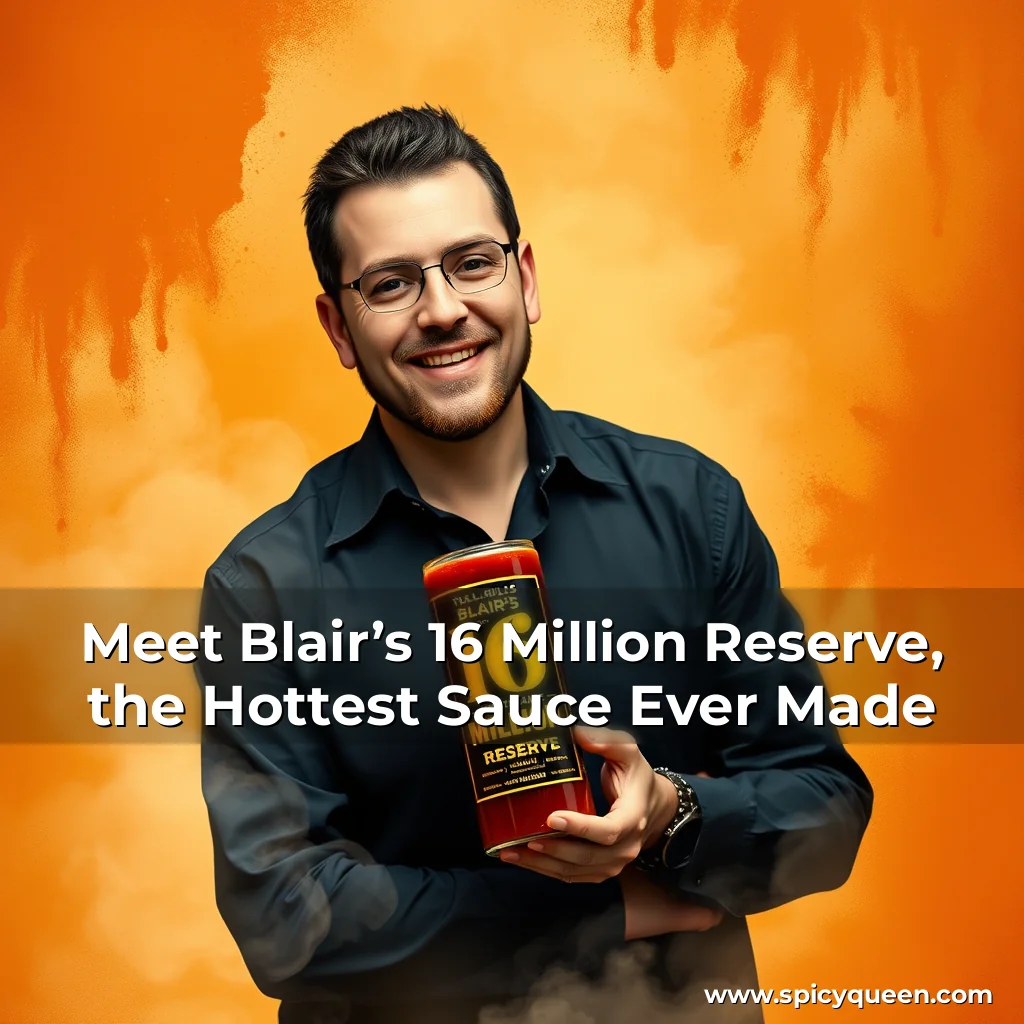
Blair’s 16 Million Reserve is a culinary creation that defies convention and pushes the boundaries of human tolerance. Crafted in 2007 by Blair Lazar of Blair’s Sauces and Snacks, this ultra-hot sauce contains pure capsaicin crystals, the chemical responsible for the infamous burning sensation associated with chili peppers. With a staggering 16 million Scoville units, it’s potentially lethal if consumed in excess. This sauce was not designed for everyday use. Only 999 bottles were produced, each one a collector’s item sealed in wax and signed like a rare wine. The protective gloves required to handle it are a testament to its extreme potency, and the demand for these bottles is sky-high, with prices reaching over $2,000.
Why Spicy Foods are Prevalent in Some Countries
In hot climates, the consumption of spicy foods is not just a matter of tradition; it serves a practical purpose. While it may seem counterintuitive, eating something that sets your mouth on fire can trick your body into cooling down. The same principle applies to taking a steaming hot shower, which can leave individuals feeling refreshed, not roasted. Countries such as India, Indonesia, Mexico, and Korea have a unique relationship with spice tolerance. For many travelers, the experience of eating spicy street food is more of a dare than a casual meal. The intense heat comes from capsaicin, a natural compound also found in pain-relief creams.
The Scoville Scale: Measuring the Heat
The Scoville scale, developed by Wilbur Scoville in 1912, is a standardized measurement of the capsaicin content in chili peppers. The unit of measurement is the Scoville Heat Unit (SHU), which ranges from zero to a face-melting 16 million.
- 0 SHU – No spice at all. This corresponds to the mild flavor of bell peppers.
- 5,000 SHU – Tabasco Sauce, which can cause a moderate sweat response in most people.
- 20,000 SHU – The level of heat that many Mexicans can handle on a regular basis.
- 1,000,000 SHU – The infamous Ghost Pepper, grown in Northeast India.
- 1,641,183 SHU – The Carolina Reaper, bred by Ed Currie in 2013 and previously considered the world’s hottest pepper.
- 2,693,000 SHU – Pepper X, Ed Currie’s 2023 follow-up to the Carolina Reaper.
- 2 to 5 million SHU – Police pepper spray, which is considered a potent deterrent.
- 16,000,000 SHU – Blair’s 16 Million Reserve, the sauce that pushed the boundaries of human tolerance.
Handling Capsaicin Safely
Pure capsaicin, the active ingredient in Blair’s 16 Million Reserve, is a highly potent compound that requires special handling precautions. Gloves, tongs, and goggles are essential for protecting yourself from skin contact and eye irritation.
“Before you even think about touching it, make sure you’ve got the right equipment. This stuff can burn like lava, and you don’t want to end up with a nasty burn on your skin.” – Blair Lazar, creator of Blair’s 16 Million Reserve
- Gloves: essential for protecting your skin from capsaicin exposure.
- Tongs: necessary for handling the sauce without coming into direct contact with your skin.
- Goggles: required for protecting your eyes from any potential splashes.
Exploring the World of Spicy Foods
The Scoville scale provides a framework for understanding the varying levels of heat in different types of chili peppers. By examining the scale, you can better appreciate the diversity of spicy foods and the cultural significance they hold in different parts of the world.
Spicy foods are not just a matter of personal preference; they are an integral part of many cuisines. From the bold flavors of Korean kimchi to the spicy kick of Mexican salsa, the world of spicy foods is vast and varied.
The experience of eating spicy food is often described as a sensory adventure. The intense heat can stimulate the senses and leave individuals feeling invigorated and refreshed. For many, the thrill of eating spicy food lies in the challenge it presents – a dare to push beyond their limits and explore new flavors.